 |
Keiying YipResidence Period: 2026.08.04-2026.09.28 |
|---|
Profile
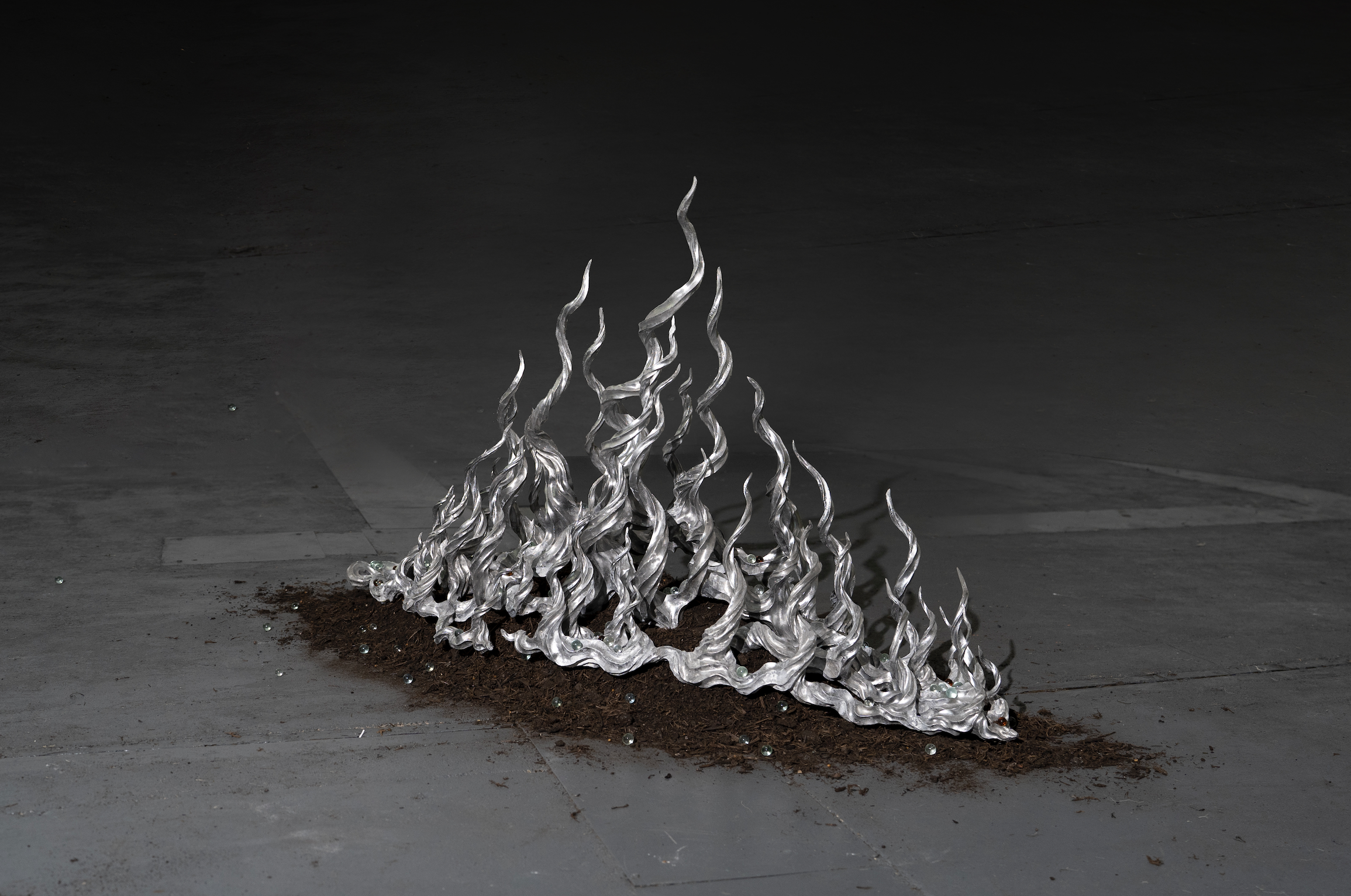
Keiying Yip explores sacredness and suffering through Buddhist philosophy, tracing how cultural looting and religious revolutions reshape the meanings of statues and ritual instruments over history. She examines the power inscribed in these symbols while acknowledging their original purpose. Treating Buddhist statues not as fixed icons but as living carapaces, she folds animal experience into sacred form: flame, cocoons, lotus. She projects human feeling onto non-human life to construct a fantastical realm where animals, plants, and humans merge into anthropomorphism, challenging human dominance in our ecology system, probing the boundaries of our uncanny self identity and non-human possibilities.
Base of Activity: London, United Kingdom; Shanghai, China
Media Used: Sculpture, installation, Performance
Selected CV:
1) Spring Roots' with Relish, Tiderip Gallery, London, 2026
2) Those Beginning Notes' with Warbling, Sanmei Gallery, London, 2025
3) Masters of Art, Sculpture, Royal College of Art, 2025
Residence Plan
Keiying's 3331 project investigates how sacred religious symbols continue to transform within the contemporary urban life of Tokyo, exploring how sacredness reappears through urban encounters and belief becomes absorbed into the noise of daily life. This research is connected to personal background, challenging perceptions of religious practice through social restrictions and cultural changes.
The project examines the exchange of religious objects between continents historically (e.g. Japan and Europe), exploring whether the forms of objects with the symbolisms attached became isolated, and how objects can carry personal memories beyond their original purposes.
During the residency, Keiying will look at how Shinto/Buddhism practices merge within Tokyo and how belief remains purposeful without dominating. The merging of pop culture with tradition is not secondary to belief, but part of its evolution. The outcome of the project will be a series of semi-open cabinets preserving "objects" with the care normally given to sacred relics, allowing the viewer to encounter a collection of personal memories.
